






How casinos helped save Deadwood

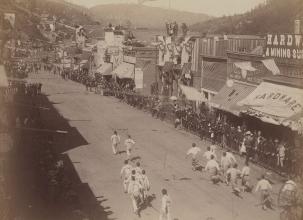
The majority of the approximately 1,800 residents of Deadwood, South Dakota, lived in the slow lane prior to the state's 1989 legalization of gaming. They would get together for a game of cards later in the day or for coffee at the local cafe. The community barely made ends meet on seasonal tourists, with the exception of a few hundred jobs created by the Homestake Gold Mine. The strongest boost came in the summer, when thousands of motorcyclists flocked to the city for the yearly Sturgis Motorcycle Classic and Rally, the country's second-largest biker event.
Whether it was legal or not, several bars had "for amusement only" slot machines and poker games. Prostitutes were still housed upstairs. This turbulent history persisted until the 1980s, when numerous stores shuttered their doors and the final three brothels were shut down by state and federal agents. A new Wal-Mart and Kmart pledged to put the finishing touches on Deadwood, which was on the verge of demise.
Then the town's authorities had an idea: Why not make Deadwood a year-round tourist destination by legalizing some gambling? This would restore the taste and enjoyment that the ladies had lost. Gaming taxes would be used to restore old water and sewer pipes and support the deteriorating buildings.
The objective was to provide an economic boost rather than to replicate Las Vegas. Mini-casinos with $5 wager limits for poker, blackjack, and slot machines would be located in businesses that also had to operate a non-gambling business, like a soda fountain, restaurant, or bar. Town officials suggested a cap of 15 machines per building, which was eventually increased to 30. In order to attract tourists, gambling would serve as a magnet. However, it was believed that the town and the Black Hills' natural beauty would entice them to return.
To advance the concept, several residents established a committee. They traveled throughout the state to gather support for a state constitutional amendment that would allow limited gaming within Deadwood's city limits. The signature drive was operational: After it was put to a vote and approved in November 1988, enabling legislation was passed by the state legislature in April of the following year, and gambling was ultimately approved by Deadwood residents in a special town election. On November 1, 1989, at noon, the new era of gaming began.
The shift was significant: Nearly suddenly, Deadwood changed from being mostly boarded up to thriving. In order to install new water mains and restore the cobblestones, streets and sidewalks were demolished. The city updated its library, museum, and fire station. A visitors' center was established in the former train station, and city hall and the police station relocated to other locations. The city was repaying the debts used to underwrite the upgrades using casino taxes. And the money came pouring in. However, the locals lost control in the midst of all the new money.
Casinos with merely a T-shirt or candy stand were authorized by the state government. Some casinos were permitted to install more than thirty slot machines due to a vague definition of what constituted a "building." The gaming commission may determine that a single facility should be counted as two or three buildings based on the original architecture, the foundation plan, or the number of enterprises. With 13 foundations—enough "buildings" for 390 slot machines—one “resort” was creatively, openly breaking the law. No one cared.
The residents of Deadwood are currently divided over whether or not their newfound wealth is worthwhile. Some have relocated out of disgust. Some think it was a survival issue.
Kevin Kuchenbecker did not pick a building when asked which preservation initiative had done the most for Deadwood during its first 150 years. He cast a ballot. South Dakotans consented to allow the gold rush town to resume gambling in 1988, with a portion of the earnings going toward preserving the tourist destinations.
According to Kuchenbecker, the city's planning, zoning, and historic preservation officer, “without that, we wouldn’t have what we got today.”
A portion of the money collected from casino taxes in South Dakota is used to support Deadwood's historic preservation. The state, Lawrence County, and schools are among the other recipients.
This funding supports the preservation of documents and images in the city's archives as well as the restoration of building facades by property owners. Preservation funds are used at the Broken Boot Gold Mine to maintain and repair the historic machinery. Additionally, his office collaborates with nearby museums like Deadwood Alive, whose historical reenactors convey the town's past to the streets.
How to spend the next dollar has not always been agreed upon by both parties. One common debate, according to Kuchenbecker, is whether to promote the casinos or the background that distinguishes Deadwood from other gambling locations. He claimed that the focus has shifted from one to the other throughout the years. He attributes today's equilibrium to frequent discussions between the city and casino operators.
Visitors will be able to see Main Street from above thanks to some of the upcoming projects. Kuchenbecker stated that his office is collaborating with the trails committee on hiking and bike routes, and the city has purchased hillside acreage to prevent development. Giving tourists a place to pause, gaze down at ancient Deadwood, and read signage describing what they see is the idea.
According to Kuchenbecker, maps are displayed at trail entry locations. Through the city's Historic Preservation Office, the Deadwood Chamber, or Deadwood History, people who are interested in volunteering, assisting with events, or serving on a board or committee can find opportunities to get involved.
Source:
“Deadwood at 150: How casino revenue helped save a gold rush town” , Ryan Hill, kotatv.com, November 5, 2026.


Please log in or register to leave a comment