



.png)


Kalshi blocked in Michigan

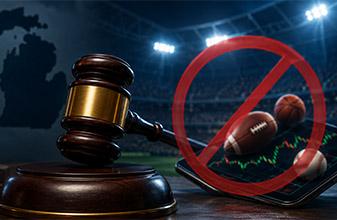
A Michigan judge temporarily prohibited Kalshi from providing contracts for sporting events, only days after the company lost an attempt to move the case into federal court.
Michigan Attorney General Dana Nessel requested a temporary restraining order (TRO) prohibiting Kalshi from offering sports markets in the state, and State Circuit Court Judge Rosemarie Aquilina granted it. Kalshi is also required under Aquilina's order to use a third-party geolocation service to make sure that its products are not accessible to Michigan residents during the order period.
Furthermore, if Kalshi doesn't follow the geolocation part of the TRO, it might be fined up to $120,000 per day.
“Our gambling laws exist to protect Michiganders from unlicensed, predatory operations, and failing to comply with them carries serious legal consequences,” Nessel said in a statement. “I am proud of the attorneys in my office who not only kept this case in state court but also secured an order protecting residents as this litigation moves forward.
“We remain committed to enforcing a level playing field for all gambling platforms in Michigan and ensuring that companies cannot evade accountability or exploit consumers under the guise of a prediction market.”
While the initial complaint is still pending in state court, Kalshi is also prohibited by the temporary order from advertising its goods and from accepting any new registrations in Michigan.
It is not surprising that Kalshi officials disagree with the state's decision and will challenge it in court, they said in a statement reacting to the initial story. According to their stance, Kalshi is solely under federal regulations.
More than three months after Nessel first brought the action in Ingham County Court, the ruling restricting Kalshi's operations in Michigan was issued. In the initial complaint, the court is asked to declare Kalshi's online sports betting business a common law nuisance and to grant a permanent injunction and order of abatement prohibiting Kalshi from operating or promoting its online sports betting business in Michigan.
According to the lawsuit, Kalshi runs a "prediction market" that allows Michigan citizens to gamble illegally under the pretense of exchanging event contracts.
Nessel said in a statement at the time, “Corporations cannot circumvent state gaming laws. My office will hold those who sidestep Michigan’s consumer protections accountable and ensure that betting in our state remains lawful, fair and subject to the oversight our residents expect and deserve.”
In response to Nessel's action against Kalshi, Polymarket filed for an injunction to stop Michigan from outlawing event contracts. A week later, the company's request for an injunction was turned down, along with its petition for a TRO.
The Massachusetts Supreme Court is considering Kalshi's future in addition to a number of other state-level legal proceedings, and an Arizona court case involving criminal charges against the prediction markets operator is still pending.
Above the growing number of state proceedings against Kalshi and Polymarket, however, is a bigger question: how long will they truly matter? The solution is at the federal level, where many industry experts anticipate that conflicting recent decisions from the Third and Sixth Circuit Courts of Appeals will ultimately be sent to Washington, D.C. for a final conclusion.
Ian McGinley, a former CFTC Director of Enforcement currently working in private practice, stated at this month's SBC Summit Americas in Ft. Lauderdale, Florida, that he believes the U.S. Supreme Court will eventually take up the matter.
Source:
“How Kalshi sports loss in Michigan court fits into big picture” , Adam Candee, sbcamericas.com, June 30, 2026.


Please log in or register to leave a comment